Complete Guide to Fertility Care and Comparing Clinic Options Worldwide
Introduction
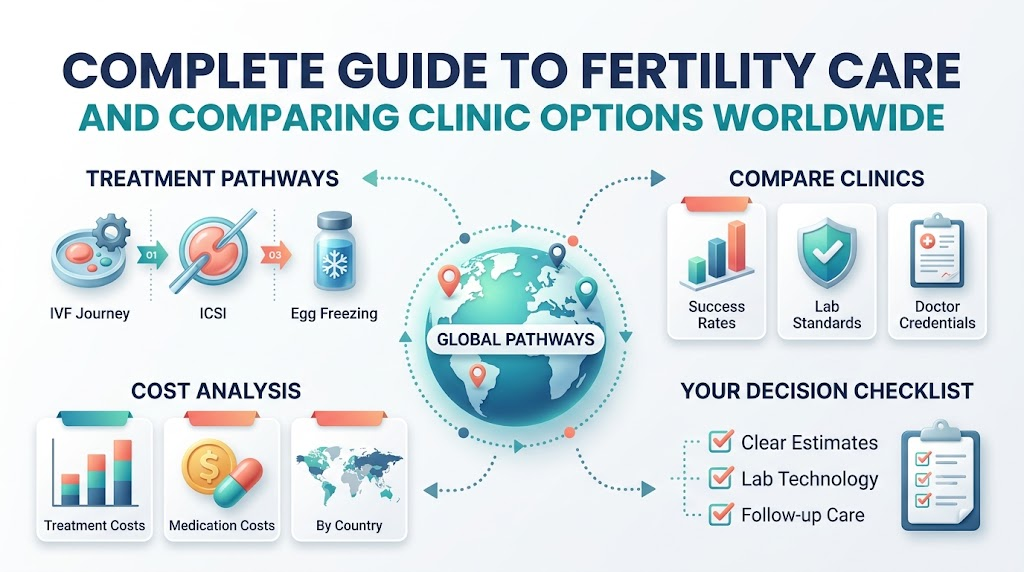
Many people want to grow their family. Sometimes a baby does not come easily. So people look into medical help. This guide explains fertility care in plain words. You will learn about treatment steps. Next, you will see what drives total prices. You will learn about clinic success rates. You will also learn about care in other countries. In addition, we cover frozen eggs and special lab tools. Choosing a clinic takes time and care. Good facts help you make calm choices. Therefore, this guide gives clear facts for your family journey.
What Is IVF Treatment?
IVF stands for in vitro fertilization. In simple words, doctors help an egg and sperm join outside the body. First, the woman takes medicine to grow healthy eggs. Next, the doctor collects these eggs during a quick visit. Then, a scientist mixes the eggs with sperm in a special glass dish. This joined cell becomes an embryo, which is an early baby seed. Afterward, the doctor places the embryo into the woman’s womb. This step is embryo transfer. However, IVF does not work for every person. Doctors check your health first to see if IVF fits your body.
Understanding IVF Treatment Cost
The price for care can change a lot between clinics. Basic fees often cover doctor visits, egg pickup, and embryo transfer. But medicine costs extra money because doses change for each patient. Also, labs charge extra fees for blood tests and ultrasound scans. If you want to freeze embryos for later, you pay yearly storage fees. Some people also need special lab tests. So, you should always ask for a full written price list before you begin.
Table 1: Major IVF Cost Areas
| Cost Area | What It Covers | Why the Price Changes |
| Clinic Care | Doctor visits, scans, and egg collection | Clinic location and doctor experience |
| Medicines | Daily hormone shots to grow eggs | Body weight and cycle length |
| Lab Services | Joining eggs and sperm in the lab | Special tools like needle injection |
| Freezing and Storage | Keeping extra embryos in cold tanks | Number of years and storage plans |
| Extra Tests | Checking embryo genes for health | Number of embryos tested |
Why IVF Success Rates Need Care
A single success number never tells the whole story. Many clinics post high numbers to look good. But success depends heavily on a person’s age. It also depends on egg quality and sperm health. In addition, personal health history changes your real chances. Some clinics only treat simple cases to keep numbers high. Other clinics take very hard cases. Therefore, ask how many live babies go home from each started cycle.
Table 2: Questions to Ask About Success Rates
| Key Question to Ask | Why This Question Matters |
| What is the live birth rate for my exact age group? | Age changes egg health more than any other factor. |
| Does this rate count started cycles or only embryo transfers? | Some cycles stop early before transfer happens. |
| How many single babies are born compared to twins? | Single healthy births are safer for mother and baby. |
| How many patients with my condition get pregnant here? | Your health diagnosis affects your personal outcome. |
How to Compare Fertility Clinics
You should compare clinics using open facts instead of flashy ads. First, look at the doctor team and their board certificates. Next, check the lab standards and clean-air tools. You must also ask about weekend doctor coverage. Ask if you will see the same doctor every visit. In addition, ask for a clear list of all fees. Platforms like IVFHospitalsNow help you find facts and verified clinic details. They help you compare services and read plain guides without clinic sales talk.
IVF Abroad and IVF Cost by Country
Many people travel to other countries for care. Some countries offer lower prices for treatment and medicine. Other countries have shorter wait times for donor care. However, you must add flight tickets, hotels, and food to your budget. You also need to learn local health laws and parent rights. Clinic quality can differ across borders. Furthermore, think about follow-up care when you return home. So, never pick a clinic based only on cheap prices.
Egg Freezing and Future Family Plans
Egg freezing helps people save healthy eggs for the future. First, you take medicine to grow multiple eggs. Next, the doctor collects the eggs with a small needle. Then, the lab cools the eggs very quickly to freeze them safely. You can store these frozen eggs for many years. Later, a lab can warm and mix them with sperm. However, frozen eggs do not guarantee a baby. They only give you a chance to try in future years.
What Is ICSI Treatment?
ICSI is a special lab tool used during IVF. The letters stand for intracytoplasmic sperm injection. In this test, a scientist picks one healthy sperm. Then, the scientist injects that sperm straight into one mature egg. Doctors often suggest this tool when sperm count is low. They also use it if sperm cannot swim well. But ICSI cannot fix every problem. It helps the egg fertilize, yet it does not promise a baby.
Real-Life Scenarios and Experiences
- Checking Total Expenses: Mark and Sarah found a clinic offering cheap cycles. But they asked for a full list of fees. They saw that medicines, freezing, and blood tests cost extra. By checking all items, they picked a clinic with clear, honest pricing.
- Reviewing Age-Based Rates: Elena was thirty-nine years old. One clinic claimed a seventy percent success rate. She asked for the live birth rate for her age group. The real rate was twenty-five percent. This honest fact helped her plan her budget calmly.
- Managing Travel and Follow-Up Care: David and Maya planned treatment in another country to save money. They checked local laws and flight costs first. Then, they found a local doctor for follow-up care back home. This step kept their care safe and smooth.
Common Mistakes to Avoid When Choosing Care
- Looking Only at Base Price: Many patients look only at the first low price tag. Always ask for a full written list of all clinic, medicine, and lab costs.
- Believing High Success Claims: Some clinics show high rates by leaving out hard cases. Always ask for live birth rates for your exact age and health history.
- Skipping Lab Verification: Patients often forget to check the lab quality. Always ask about lab clean-air systems and scientist experience.
- Ignoring Travel Expenses: People going abroad often forget hotel and food costs. Always build a full travel budget that includes extra rest days.
- Overlooking Follow-Up Care: Patients sometimes forget about care after an embryo transfer. Always make sure your home doctor agrees to help after you return.
- Rushing Without Second Opinions: Choosing the first clinic quickly can lead to regrets. Meet with at least two clinics to compare communication and plans.
- Misunderstanding Frozen Egg Guarantees: Some assume every frozen egg becomes a healthy baby. Talk with your doctor about how many eggs you realistically need.
- Not Asking About Hidden Storage Fees: Patients often forget embryo storage fees after treatment ends. Always check the yearly bill for keeping embryos in cold tanks.
How IVFHospitalsNow.com Can Help With Research
The platform serves as an independent fertility education and research site. It helps patients discover verified providers without sales bias. You can read easy guides about treatments and tests. You can also explore clear medicine guides and typical costs. The site explains doctor credentials, clinic locations, and country rules. In addition, it teaches you how to read success rates safely. By using these tools, you can build smart questions for your medical team.
A Simple Way to Plan Your Research
First, write down your health goals and budget limits. Next, list three or four licensed clinics to review. Ask each clinic about their doctor team and lab tools. Then, ask for a complete list of all treatment costs. Check what happens if a cycle cancels early. Ask how many cycles patients usually need. Also, ask about embryo storage rules and costs. Finally, talk with your family doctor to review your final choice safely.
Frequently Asked Questions
1. What is the difference between IUI and IVF?
IUI places washed sperm straight inside the womb around ovulation time. The egg and sperm join inside your body. IVF collects eggs and joins them with sperm inside a laboratory dish. Doctors place the formed embryo into the womb later. IVF involves more medicine, lab work, and higher costs.
2. Does an IVF cycle hurt?
Most patients feel mild pain during care. Daily hormone shots can cause small bruises and stomach bloating. The egg collection uses light medicine so you sleep through pain. Afterward, you might feel mild cramps like a normal period. Doctors give simple pills to keep you comfortable.
3. How long does one full IVF cycle take?
One full cycle takes about two to four weeks. First, you take medicine for ten to twelve days. Next comes the egg collection and lab work. An embryo transfer can happen five days later. However, some patients wait a month before transfer to let the body rest.
4. How much does IVF treatment cost on average?
Basic clinic fees often cost between four thousand and twelve thousand dollars. But medicines add several thousand dollars more. In addition, lab tests and freezing fees increase the bill. Total costs depend on clinic location, medicine needs, and extra services. Always ask for a written total.
5. Can IVF guarantee a healthy baby?
No medical clinic can promise a baby. IVF improves your chances when natural conception is difficult. Success depends on age, egg health, sperm health, and womb conditions. A good clinic shares honest odds. They never promise guaranteed results for any patient.
6. Why do success rates drop as women grow older?
Women are born with all the eggs they will ever have. Over time, the number of eggs in the ovaries goes down. Egg quality also declines as time passes. Lower egg quality makes fertilization harder. It also raises the chance of cell errors during early embryo growth.
7. What are the main risks of fertility treatments?
The main risks include mild bloating, bruising, and mood swings from medicines. Rarely, ovaries swell too much, which doctors call OHSS. Transferring more than one embryo can cause twin pregnancies. Twins bring higher health risks for the mother and babies during birth.
8. What is the purpose of ICSI in the lab?
ICSI helps when sperm cannot fertilize an egg on their own. A lab scientist uses a tiny glass needle to place one sperm directly into an egg. This tool helps couples facing low sperm counts or poor sperm movement. It makes fertilization more likely in the lab.
9. How many eggs should a woman freeze?
Most doctors suggest freezing ten to twenty mature eggs. Younger women often need fewer eggs for a good chance later. Women over thirty-five may need more cycles to collect enough healthy eggs. Freezing eggs gives you options, but it cannot promise a future baby.
10. Is it safe to travel to another country for IVF?
Traveling abroad can be very safe if you pick a licensed clinic. You must check local clinic standards, doctor training, and legal rules. Also, plan for travel delays and rest after procedures. Always arrange follow-up care with your local doctor before leaving home.
11. What extra services add to total clinic costs?
Extra costs include genetic testing of embryos, ICSI procedures, and embryo glue. Yearly fees for frozen storage also add up over time. Some clinics charge extra for weekend visits or anesthesia. Always ask your clinic which services are necessary and which are optional.
12. How do I prepare for my first fertility visit?
Gather your past medical records, blood tests, and cycle history. Write down a list of questions about costs, treatment types, and doctor availability. Bring your partner if you have one. Stay open-minded and take notes so you can review details calmly at home.
Conclusion
Choosing fertility care is an important personal step for your family. You should always look at complete facts instead of low prices or big success numbers. Take time to check doctor experience, lab standards, and honest total costs. Research platforms help you compare options with ease and comfort. Always share your questions openly with a licensed fertility doctor. Clear facts and good medical support will help you choose the best path forward.
Leave a Reply